Wednesday, April 27, 2016

Music Outreach Program Receives Gladys Lux Education Award

The 2016 Mayor’s Arts Awards will honor the Music Outreach Program (MOP) of the Lincoln Music Teacher’s Association (LMTA) with the Gladys Lux Education Award. This award “recognizes special initiatives in or dedication to arts education” and could hardly find a better organization to recognize than MOP.

Jessica Freeman, MOP Chair, explains that this award is “an honor and wonderful recognition of LMTA's efforts with this program to help at-risk students receive quality instruction in music.” 

“The program is run by a volunteer 9 member committee.  Thirteen LMTA teachers with Professional Status serve 50 students studying piano, voice, violin, viola, guitar, and flute. Music Outreach Students participate fully in their assigned studio teacher's events including studio recitals, participation in LMTA events, and other performance opportunities as their skills develop.”

The benefits of MOP for the community are far reaching. Besides providing lessons to students and families who would otherwise not be able to afford them, it also gives opportunities to teachers to go beyond what they might normally do in their studios and gives others in the community the chance to contribute through grants and donations to a wonderful cause. Just five years ago, LMTA had occasion to begin an Endowment fund that ensures the good work of MOP will continue for many years to come. 

MOP student and teacher performing
credit: LMTA
The students that participate in MOP are already making their own contributions to the community, as Freeman said, “in studio recitals, participation in LMTA events, and other performance opportunities as their skills develop.  All Music Outreach Teachers are encouraged to host outreach recitals for the community. These have included performances at the Madonna Rehabilitation Hospital, various retirement communities, and school performances. Several MOP students have become proficient enough at performing to secure leading positions in the school and youth orchestras and/or perform senior recitals. Others have performed for events such as the Lincoln Community Foundation's Donor Recognition Luncheon.  One MOP student was even inspired to perform on a street corner in the Haymarket to raise funds for a family he had heard about who had recently lost their father/husband and had no funds to pay for funeral expenses.  Several of the MOP students love music so much that they study multiple instruments (often by working out deals with a teacher for a second instrument) or they've quit the Music Outreach Program so that they can become more involved with school musicals and other music opportunities.”

Find out more about how you might contribute to MOP at the LMTA website.
--
Enjoyed this article? Follow LincolnCMN on Facebook and twitter for more!

Friday, April 15, 2016

MarySue Harris: Rewards and Awards of a Life of Teaching

Nebraska Music Teachers Association (NMTA) has much to be proud of this year. In addition to David von Kampen’s award as MTNA 2015 Distinguished Composer of the Year, longtime NMTA teacher MarySue Harris was awarded the Distinguished Service Award. 

Although Harris was “truly in disbelief about receiving the award,” it is certainly a well-deserved recognition for not only 40+ years of teaching, but also many years of involvement in teachers associations at local and national levels. Harris spoke with LincolnCMN this week about the award and her career as a teacher. 

“It is an extremely meaningful award because it validates all of my service (musically and as a  volunteer) for many years!  Hearing them read my service record was truly an amazing realization.....that I actually HAD served my local, state and national organizations, with great joy!”

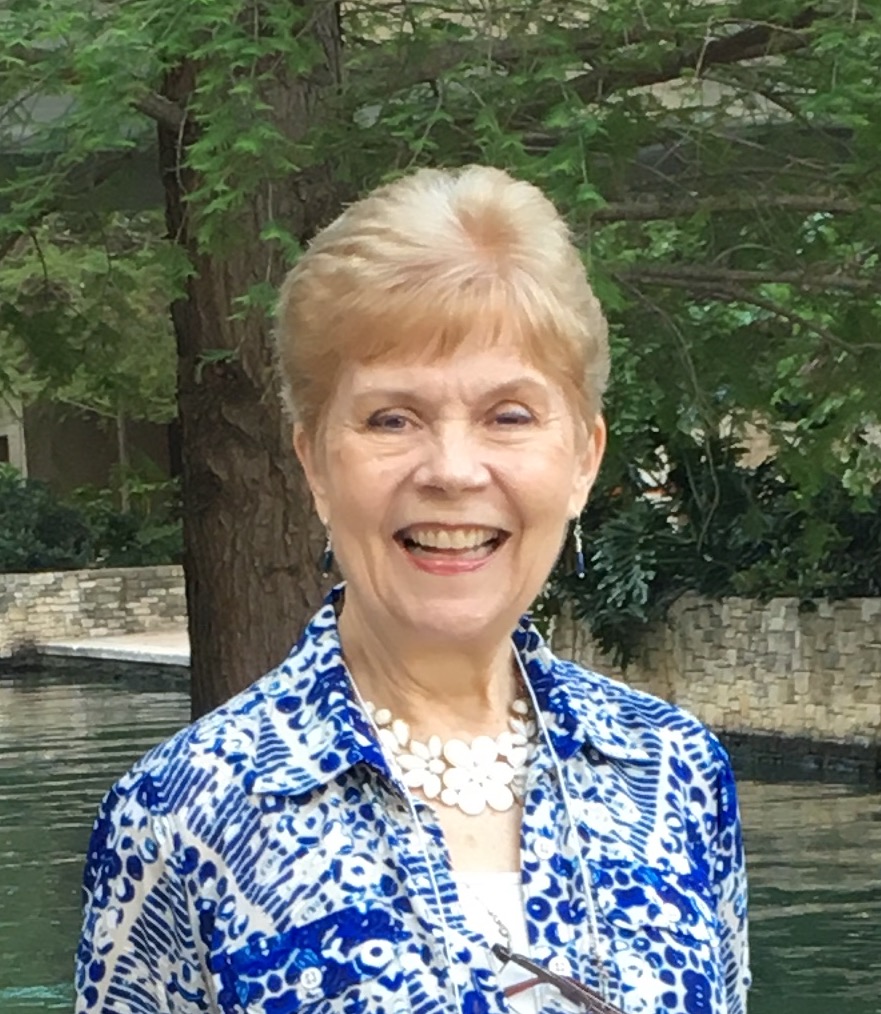
MarySue Harris MTNA 2015 Distinguished Service
In the 1990s, Harris was twice honored in Nebraska once as Teacher of the Year and later with the Service Award for outstanding service. At the national level, she served as Community Outreach and Education Chair. Harris has also established an endowment fund that “allows qualified the qualified teacher to receive money from the Fellowship to build his/her studio and help it prosper.” Certainly, in this way, Harris will continue helping the music teaching community for many years to come.

“It has been a constant goal to be the best member I could be, of all the music teachers organizations; and they have served me so well as I participated to the fullest!” Harris is a wonderful example of the reciprocity of the music teachers associations—as she gave of her time, she received fellowship and practical help as well.

Harris’ life of teaching has been a joy to her as well as others:

“Having just given a workshop on technic today for Lincoln Music Teachers, I am reminded that the interest, receptivity and thoughtful consideration given to me by the teachers attending were the best rewards I could ever hope for!  There is definitely  a reciprocal element in giving of yourself.  I am most grateful for all the interest and eagerness to learn something new that the teachers showered on me!  I had this same kind of welcome reception from my students when I was teaching!  It was always a real pleasure to teach!”


Harris’ advice for other teachers is to wish them what she has found to be true: “Give it your ALL!  And it will reward you in return!”
--
Enjoyed this article? Follow LincolnCMN on Facebook and twitter for more!
Thursday, April 14, 2016

MTNA awards David von Kampen's musical world

David von Kampen is the winner
of the MTNA 2015 Distinguished
Composer of the Year
 
David von Kampen has an impressive About page at his website and is currently lecturer of theory and literature at the University of Nebraska-Lincoln among other positions and accomplishments—but you don’t need to know all that to become a fan. 

Just take a listen to his music.

The judges for the Music Teachers National Association (MTNA) 2015 convention must have thought the same thing: out of 32 entries, von Kampen’s song cycle, “Under the Silver and Home Again: Five Walter de la Mare Lyrics for Baritone and Piano” was selected as the winner for 2015 Distinguished Composer of the Year.

von Kampen recently spoke with LincolnCMN about this piece and the award. The piece was commissioned by the Nebraska Music Teachers Association (NMTA), and von Kampen had no trouble choosing to compose for baritone and piano; “I wanted to write something for Nathan Sullivan to perform, and I knew piano/vocal would be easily transportable. I decided it would be a song cycle, then went poem-hunting.”

von Kampen settled on five poems by Walter de la Mare, “The Old Stone House,” “The Buckle,” “The Ride-by-Nights,” “Bunches of Grapes” and “Mistletoe.” When asked to give listening advice for this work, von Kampen said, “in a piece like this, I'm trying to establish contrasting musical characters between the movements. If you listen through the whole thing, hopefully there is a really nice sense of flow from one to the next - where nothing sounds the same, but it all feels like it belongs to the same world.”

Fortunately, you can listen to each movement of “Under the Silver and Home Again” here and get a sense for this “world” that von Kampen has created with this work. Many of von Kampen’s compositions can be heard on soundcloud, and listeners will enjoy the jazz influence in many of his pieces: “When I'm not writing for actual jazz ensembles (instrumental or vocal),” von Kampen shared, “I think my jazz background still comes through the music a little bit. Generally this is more about the harmony than rhythm or style. Jazz harmony is both complex and beautiful, which I think is an appealing combination.” He went on to state, “I like all sorts of different things.” 

As von Kampen enjoys “great songwriters, all sorts of popular and folk music. Choral, chamber music, musical theater,” he says that his career as a musician and composer was thanks to “very supportive parents and teachers” and the fact that “the more I did composed, the more natural it became.”

His advice to aspiring professional musicians and composers is to “Become a decent pianist, learn how to play by ear. Be able to sing (even if you aren't a singer), and be able to sight-read. Get practical experience however you can - composing, performing. Collaborate with friends. Listen to lots of music.”


As a modern composer in today’s world where many still think of classical music as “dead” or at least “boring,” von Kampen brings a sound that is very alive—blending many wonderful styles of music in his own unique style. 
__
Enjoyed this article? Follow LincolnCMN on Facebook and twitter for more!

Sunday, January 31, 2016

St. Olaf Choir Concert: Hope for today and for the future

Last night, the St. Olaf Choir sang to a sold out crowd at First Plymouth Church. “Tonight,” said Conductor Anton Armstrong, whose preconcert interview with LincolnCMN can be read here, “this space truly feels like a place of worship.” The concert was more than a concert, in a way, everyone was joined together in a time of prayer—listening and soaking in a “message of hope and light.”

The texts selected varied in language, but certainly all contained the transformative message of love and hope that Armstrong spoke of at the end of the evening. Latin, Hebrew, German, and English were all sung, and the texts ranged from scripture to poetry to liturgical prayers. 

St. Olaf Choir 2016 Winter Tour
courtesy of St. Olaf Choir
The variety of styles made the evening more enjoyable than many choral concerts tend to be when the constant sameness of sound has a numbing quality. From a not-often-heard work by Bach to a Ginastera setting of the Lamentations of Jeremiah  to a very unexpected and rousing gospel-style setting of Credo featuring piano and drum set or the beautiful Magnificat of David N. Childs with its ancient text and modern harmonies, the program was designed by a masterful hand. The sound of each new piece was alternately uplifting, exciting, peaceful, beautiful, hopeful, or triumphantly powerful.

Whether the music was written in the 1700s or 2015, the choir was moving with rhythm and emotion flowing through their bodies. An audience can’t help but feel and move with the music when presented with sound and sight that catches them up and draws them along so completely!

In the performance given by these young people, the audience could hear why diction, dynamics, pitch, and the multitude of things a conductor pleads with his choir to do are so important, when done properly, music is created. The details don’t stand out, they are forgotten, and all the listener experiences is simply music—that mysterious art that moves people beyond their own hurts and sorrows and gives them hope. It is clear that whatever transformation may have taken place in the hearts of audience members, the experiences these young college students have from singing in this choir will have a profound impact in who they are as they go out into their various careers. 

__
Enjoyed this article? Follow LincolnCMN on Facebook and twitter for more!

Saturday, January 23, 2016

Anton Armstrong and the St. Olaf Choir: Unity, hope, and love

St. Olaf Choir in Concert
courtesy of St. Olaf Choir
On Saturday, January 30th, at 7:00pm, the St. Olaf Choir will perform as a part of the Abendmusik season at First Plymouth Church (2000 D Street). The choir performed in Lincoln in 2011, and whether you were in the audience then or not, now is a not-to-be-missed chance to be transformed by a message of hope and love.

In an exclusive interview with LincolnCMN, Conductor Anton Armstrong explained that the choir’s purpose is “not to entertain.” Instead, “if we have done our job properly, the listener will feel transformed. If the listener is entertained, that is simply a wonderful byproduct.” In selecting the repertoire and rehearsing the choir, Armstrong has spent time on the meaning of the texts “not just on the music.”

What does this mean? Certainly, the St. Olaf Choir excels in their choral sound and musicality. They are “amateurs,” Armstrong says, but only in the best sense of the word which comes from the Latin word “amat, to love.” While the choir sings at a high professional level, it is unlike “professionals [who] often forget the love of the art. This group will not disappoint.”

Having evolved over 104 years, the choir is, in a way, “a microcosm of the college.” St. Olaf College is, as described by Armstrong, “a traditional, liberal arts college, but with a global perspective and grounded in faith; an ecumenical community of faith.”

Anton Armstrong conducting
courtesy of St. Olaf Choir
Armstrong, only the fourth conductor in the history of the choir, sang as a student in the choir during it’s 75th anniversary year. Under his predecessor, Kenneth Jennings, Armstrong was given “insight into the history of the choir.” While Jennings was also “opening the sound” including music more acceptable to modern aesthetics of the late 20th century. Jennings expanded to choir’s repertoire to include not only sacred, but also secular works.

“Jennings opened the door, and I kicked it wide open.” 

Besides including some instruments instead of being exclusively a cappella, Armstrong has broadened the styles of choral music that the choir sings. As the choir has traveled around the world, they have expanded their repertoire to include the music of the places they travel. They’ve also included more music that is a part of America, Armstrong shared, “I love styles of Gospel and African work songs and freedom. No other group was doing that kind of thing when we started.”

In Lincoln, the audience will also hear a piece by a current student in the choir, “encouraging modern composers and works,” and step back in time to a lesser known work by Bach. “It’s a smorgasbord,” Armstrong commented. The evening will include a work by Jennings, Armstrong’s predecessor who passed away this past year; Ginastera, in honor of the hundredth anniversary of his birth; a choral work by Kurt Weill, “he’s not usually associated with choral works, but this is a wonderful piece, a Shabbat prayer.”

Most importantly, Armstrong’s wish for the Lincoln audience is the same as what he wishes for the students in the choir, that “the music will feed their souls.”  


It’s recognizing the diversity of the students, or of the audience, “we think of diversity of ethnicity and race (which there is in this choir), but in the years I’ve been here, I’ve realized that diversity goes beyond that. It is socio-economic, political, religious, spiritual—even if they look the same, they are not the same.” But in this musical experience, Armstrong wants singers and listeners alike to “leave transformed as human beings. To be opened up to a message of hope, of love, and to feel a little better about the world that they live in. In a time of division and hate, find unity and love.” 

--
Enjoyed this article? Follow LincolnCMN on Facebook and twitter for more!